
What is Prostatic Artery Embolization (PAE)?
Prostate Artery Embolization (PAE) is a safe and effective, non-surgical, minimally-invasive treatment for Benign Prostatic Hyperplasia (BPH), a common condition characterized by an enlarged prostate. Approximately 50% of men in their 50s experience BPH symptoms, with the prevalence increasing with age. PAE boasts a high success rate, with over 90% of men finding relief within the first year. Notably, unlike other treatments that may have undesirable sexual side effects, PAE does not impact sexual performance.
Indicators That PAE May Be Beneficial
- Increased urination, particularly during the night
- Trouble initiating urination
- Weak flow of urine
- Dribbling or unintentional leakage of urine
- A sensation of incomplete bladder emptying after urination
- Recurrent urinary tract infections (UTIs)
- Presence of blood in urine
- Interrupted sleep due to nighttime urination
- Difficulty fully emptying the bladder
Treatment Options for an Enlarged Prostate
At Urology Specialists of the Carolinas (USOC), our experienced urologists offer personalized treatment plans for BPH, including PAE, medications, and surgical options. Our experts will guide you in selecting the best enlarged prostate treatment tailored to your unique symptoms and medical needs.

The PAE Procedure
Prostate Artery Embolization (PAE) treatment is performed by an interventional radiologist, a specialized doctor trained in using advanced imaging technologies to visualize and treat complex conditions without the need for surgery.
During the PAE Procedure
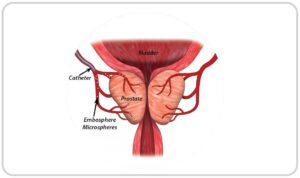
- A small catheter (thin tube) is inserted through a blood vessel in the wrist or groin.
- The doctor carefully guides the catheter to the tiny vessels that supply blood to the enlarged prostate.
- Tiny, round particles are injected through the catheter to block blood flow to the enlarged prostate.
- The majority of procedures take 1-2 hours, but could be up to 4 hours, depending on vascular network and other factors.

After the PAE Procedure
- The prostate gland shrinks due to reduced blood supply, opening the urine channel (urethra) and allowing urine to flow more normally.
- The prostate’s blood supply is only partially reduced, ensuring the prostate remains healthy.
- The particles used in the procedure are:
- Safe
- Permanent
- Proven effective with years of successful use and no major concerns
- PAE is an outpatient procedure, so most patients go home the same day. After the procedure, you will be closely monitored by our healthcare team.
What Are The Risks of PAE?
PAE has a lower risk of complications and fewer side effects than surgical options.
Benefits of PAE
- Minimally invasive procedure
- Quick recovery with minimal downtime
- Lower risk of sexual side effects, such as erectile dysfunction or dry ejaculation
- Reduced chance of urinary incontinence (leakage)
- Preserves prostate tissue
Side Effects
- Blood in the urine, semen, or stool (temporary)
- Pelvic discomfort or low-grade fevers
- Temporary increase in urinary symptoms like frequency
- Infections at the catheter site or prostate (rare)
- Particles entering arteries supplying other organs (extremely rare)
While some mild side effects are generally expected, they are temporary and typically resolve on their own or with simple medications.
PAE Experts at Urology Specialists of the Carolinas
At Urology Specialists of the Carolinas, we pride ourselves on partnering with highly skilled interventional radiologists specializing in Prostate Artery Embolization (PAE). Our PAE team is comprised of renowned experts who have performed numerous PAE procedures, honing their skills and expertise to deliver exceptional results.
Ideal Candidates for PAE
Men diagnosed with Benign Prostatic Hyperplasia (BPH) may be suitable for PAE if:
- Medications have not effectively managed their symptoms
- They are not good candidates for or prefer to avoid invasive surgery
- They have reasonable kidney function
- They are not allergic to the contrast dye used during the procedure
Does Insurance Cover PAE?
We evaluate each patient’s insurance plan to determine coverage for PAE.
- Traditional Medicare generally covers PAE
- Many Medicare Advantage and replacement plans also provide coverage, though specifics vary
- Some private insurers cover PAE, but this depends on the individual insurance company and plan
Next Steps
If you are interested in PAE or other BPH treatments, schedule a consultation with one of our Urologists. During your evaluation, we’ll determine if PAE or another option is right for you.
This may involve:
- Measuring the size of your prostate
- Examining the bladder and testing urine flow
- PSA testing
- CT scan imaging to evaluate blood vessels in the prostate
Prostatic Artery Embolization (PAE)
- No general anesthesia is needed
- The procedure is typically well-tolerated and causes minimal discomfort
- Most patients do not need a urinary catheter during or after the procedure
- The procedure lasts 1-2 hours, with monitoring for another 1-2 hours before discharge
- Recovery is quick, with most patients resuming normal activities within a few days
Since PAE is non-surgical, urinary symptoms improve gradually. Many patients notice improvements starting about a month after the procedure, with continued relief in the following months.
F.A.Q
How do I know if PAE is right for me?
Your urologist will evaluate your symptoms, medical history, and test results to determine if PAE is a good option for you. Patients with moderate to severe urinary symptoms from an enlarged prostate who want a minimally invasive treatment are often good candidates.
Will the procedure be painful?
Most patients experience minimal discomfort during the procedure. You’ll receive medications to help you relax and manage any pain.
How long does it take to recover from PAE?
Recovery is typically quick. Most patients resume normal activities within a few days and notice symptom improvement within a month.
Are there any lifestyle restrictions after the procedure?
You may need to avoid heavy lifting and strenuous activities for a few days, but most daily activities can be resumed quickly.
Is PAE a permanent solution for BPH?
PAE provides long-lasting relief for most patients. However, since BPH is a progressive condition, some men may require additional treatments years later. This is a similar dynamic for other minimally invasive procedures and surgeries for BPH.
Will I need someone to drive me home after the procedure?
Yes, you will need someone to drive you home as you may feel drowsy from the medications administered during the procedure.
What is Prostatic Artery Embolization (PAE)?
Prostate Artery Embolization (PAE) is a safe and effective, minimally invasive treatment for Benign Prostatic Hyperplasia (BPH), a common condition characterized by an enlarged prostate. Approximately 50% of men in their 50s experience BPH symptoms, with the prevalence increasing with age.
Overview of PAE Procedure
- No general anesthesia is needed
- The procedure is typically well-tolerated and causes minimal discomfort
- Most patients do not need a urinary catheter during or after the procedure
- The procedure lasts 1-2 hours, with monitoring for another 1-2 hours before discharge
- Recovery is quick, with most patients resuming normal activities within a few days
Since PAE is non-surgical, urinary symptoms improve gradually. Many patients notice improvements starting about a month after the procedure, with continued relief in the following months.
Indicators That PAE May Be Necessary
- Increased urination, particularly during the night
- Trouble initiating urination
- Weak flow of urine
- Dribbling or unintentional leakage of urine
- A sensation of incomplete bladder emptying after urination
- Recurrent urinary tract infections (UTIs)
- Presence of blood in urine
- Interrupted sleep due to nighttime urination
- Difficulty fully emptying the bladder
Treatment Options for an Enlarged Prostate
At Urology Specialists of the Carolinas (USOC), our experienced urologists offer personalized treatment plans for BPH, including PAE, medications, and surgical options. Our experts will guide you in selecting the best enlarged prostate treatment tailored to your unique symptoms and medical needs.
The PAE Procedure
Prostate Artery Embolization (PAE) treatment is performed by an interventional radiologist, a specialized doctor trained in using advanced imaging technologies to visualize and treat complex conditions without the need for surgery.
During the PAE Procedure
- A small catheter (thin tube) is inserted through a blood vessel in the wrist or groin.
- The doctor carefully guides the catheter to the tiny vessels that supply blood to the enlarged prostate.
- Tiny, round particles are injected through the catheter to block blood flow to the enlarged prostate.
After the PAE Procedure
- The prostate gland shrinks due to reduced blood supply, opening the urine channel (urethra) and allowing urine to flow more normally.
- The prostate’s blood supply is only partially reduced, ensuring the prostate remains healthy.
- The particles used in the procedure are:
- Safe
- Permanent
- Proven effective with years of successful use and no major concerns
What Are The Risks of PAE?
PAE has a lower risk of complications and fewer side effects than surgical options.
Benefits of PAE
- Lower risk of sexual side effects, such as erectile dysfunction or dry ejaculation
- Reduced chance of urinary incontinence (leakage)
Side Effects
- Blood in the urine, semen, or stool (temporary)
- Pelvic discomfort or low-grade fevers
- Temporary increase in urinary symptoms like frequency
- Infections at the catheter site or prostate (rare)
- Particles entering arteries supplying other organs (extremely rare)
These side effects are expected; however, they are only temporary and typically resolved independently or with simple medications.
PAE Experts at Urology Specialists of the Carolinas
At Urology Specialists of the Carolinas, we pride ourselves on partnering with two highly skilled interventional radiologists specializing in Prostate Artery Embolization (PAE). Our PAE team is led by renowned experts Dr. Feraz Rahman and Dr. Neal Khurana, who have performed numerous PAE procedures, honing their skills and expertise to deliver exceptional results. Dr. Feraz Rahman and Dr. Neal Khurana perform most of our PAE surgeries, with additional interventional radiologists assisting when necessary.
Ideal Candidates for PAE
Men diagnosed with Benign Prostatic Hyperplasia (BPH) may be suitable for PAE if:
- Medications have not effectively managed their symptoms
- They are not good candidates for or prefer to avoid invasive surgery
- They have reasonable kidney function
- They are not allergic to the contrast dye used during the procedure
Does Insurance Cover PAE?
We evaluate each patient’s insurance plan to determine coverage for PAE.
- Traditional Medicare generally covers PAE
- Many Medicare Advantage and replacement plans also provide coverage, though specifics vary
- Some private insurers cover PAE, but this depends on the individual insurance company and plan
Next Steps
If you are interested in PAE or other BPH treatments, schedule a consultation with one of our Urologists. During your evaluation, we’ll determine if PAE or another option is right for you.
This may involve:
- Measuring the size of your prostate
- Examining the bladder and testing urine flow
- PSA testing
- CT scan imaging to evaluate blood vessels in the prostate
F.A.Q
How do I know if PAE is right for me?
Your urologist will evaluate your symptoms, medical history, and test results to determine if PAE is a good option for you. Patients with moderate to severe urinary symptoms from an enlarged prostate who want a minimally invasive treatment are often good candidates.
Will the procedure be painful?
Most patients experience minimal discomfort during the procedure. You’ll receive medications to help you relax and manage any pain.
How long does it take to recover from PAE?
Recovery is typically quick. Most patients resume normal activities within a few days and notice symptom improvement within a month.
Are there any lifestyle restrictions after the procedure?
You may need to avoid heavy lifting and strenuous activities for a few days, but most daily activities can be resumed quickly.
Is PAE a permanent solution for BPH?
PAE provides long-lasting relief for most patients. However, since BPH (Benign Prostatic Hyperplasia) is a progressive condition, some men may require additional treatments years later. This is a similar dynamic for other minimally invasive procedures and surgeries for BPH (Benign Prostatic Hyperplasia).
Will I need someone to drive me home after the procedure?
Yes, you will need someone to drive you home as you may feel drowsy from the medications administered during the procedure.
Providers Who Perform This Procedure

TIRTH PATEL, M.D.